
Oct 17, 2022
Rashid Sumaila wins RSC’s Miroslaw Romanowski Medal
Rashid Sumaila wins RSC’s Miroslaw Romanowski Medal for scientific work relating to environmental problems
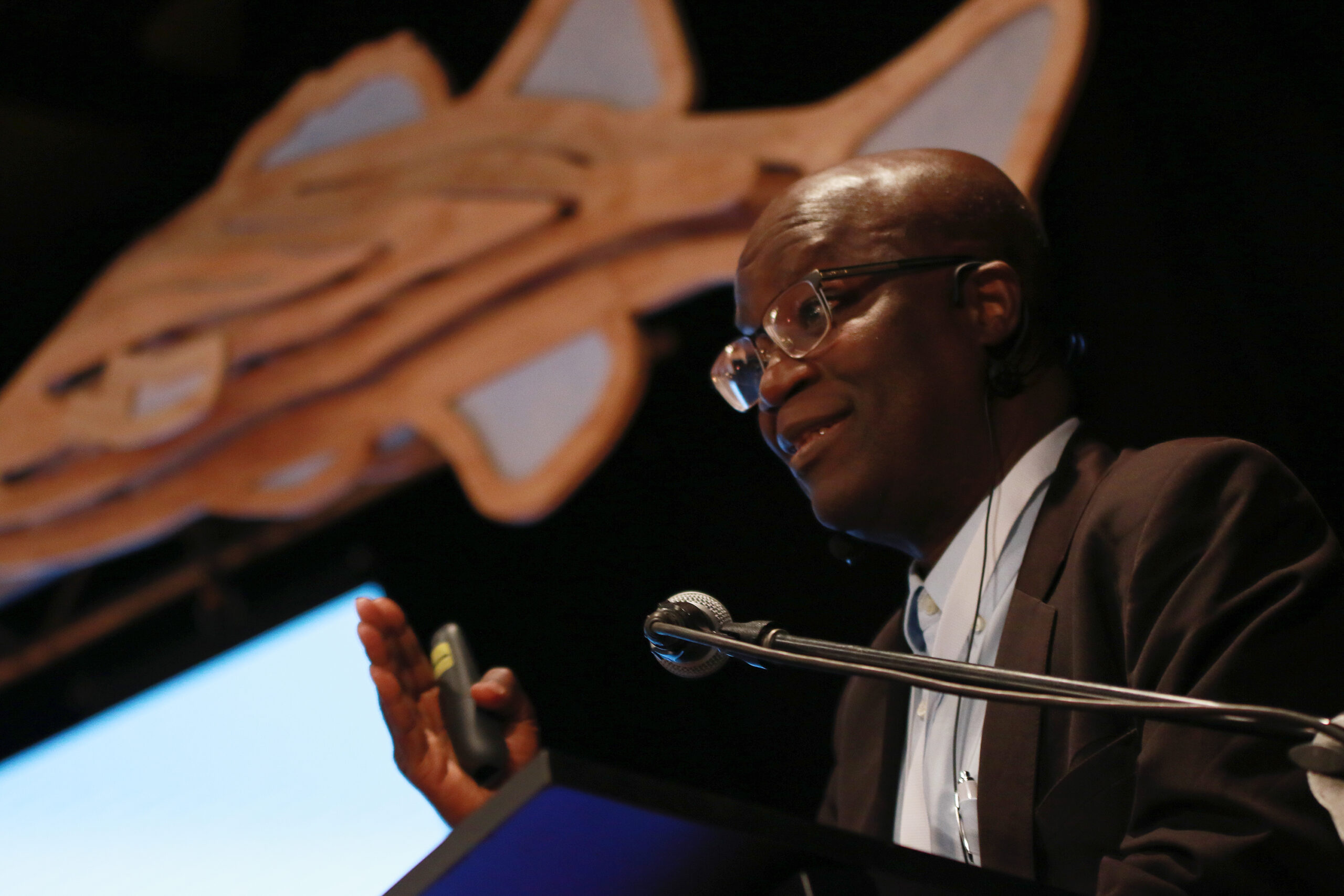
Section titled “Rashid Sumaila wins RSC’s Miroslaw Romanowski Medal for scientific work relating to environmental problems”Dr. Rashid Sumaila, Solving-FCB Scientific Director and University Killam professor in UBC Science’s Institute for the Oceans and Fisheries, as well as the School of Public Policy and Global Affairs in the Faculty of Arts, has won the Royal Society of Canada (RSC)’s Miroslaw Romanowski Medal for scientific work relating to environmental problems.
“This is a national competition among members of the RSC that study any and all aspects of environmental sustainability,” said Dr. Sumaila. “Winning the award is therefore a wonderful honour – it is also a solid recognition of interdisciplinary oceans and fisheries economics.”
The Royal Society of Canada comprises over 2000 Canadian scholars, artists, and scientists, peer-elected as the best in their field. These are distinguished men and women from all branches of learning who have made remarkable contributions in the arts, the humanities and the sciences, as well as in Canadian public life. The Miroslaw Romanowski Medal is awarded for “significant contributions to the resolution of scientific aspects of environmental problems or for important improvements to the quality of an ecosystem in all aspects – terrestrial, atmospheric, and aqueous – brought about by scientific means.”
“Climate change is surely the most important environmental issue facing us today because of its widespread impact through economy and society. Understanding how climate change affects the biophysics and the wellbeing of ocean life is central to my work. I study how climate change is already impacting life in the ocean,” said Dr. Sumaila.
“Dr. Sumaila is a tremendous inspiration to the next generation of scholars and practitioners,” said Dr. William Cheung, professor and Director of the Institute for the Oceans and Fisheries. “He strives to make sure that his works are heard and used at the highest level of decision making in tackling the main challenges in marine conservation. He has particularly encouraged colleagues and students to facilitate the transfer and mobilization of knowledge to solve global environmental problems.”
Dr. Sumaila complements his research with leadership in, and development of, interdisciplinary, multi-institutional research partnerships. He was the coordinating author of the fisheries chapter of UNEP’s Green Economy Report, part of the group that developed UNEP’s Global Biodiversity Outlook 3 and 4, and also served as the Team Leader of the International Centre for Trade and Sustainable Development (ICTSD) and the World Economic Forum’s E15 Initiative Fisheries and Oceans expert group. He serves on the High-Level Panel (HLP) on Global Assessment of Resources for Implementing the Strategic Plan for Biodiversity 2011-2020 , participated on the UN expert panel to develop a conceptual framework for the work of the International Panel for Biodiversity and Ecosystem Services of the UN (IPBES), and was recently asked to join the Expert Group for the High Level Panel on Building a Sustainable Ocean Economy, struck by the Prime Minister of Norway and President of the Republic of Palau. In addition, he continues to be active at the science-policy interface, bringing his expert scientific knowledge into policy and governance discussions through collaboration with NGOs, national governments, and international organizations such as the OECD, the African Union, and World Trade Organization.
Among his other distinctions, Dr. Sumaila was inducted as a Fellow of the Royal Society of Canada in 2019, and won the Volvo Environment Prize and the Peter Benchley Ocean Award for Excellence in Science in 2017. He also serves on the Board of Directors of Oceana, and the Science Advisory Board of WWF-Canada as well as several journal editorial boards including those of Science Advances, Environmental & Resource Economics, and Marine Policy.