
Modelling
Bridging Science and Policy
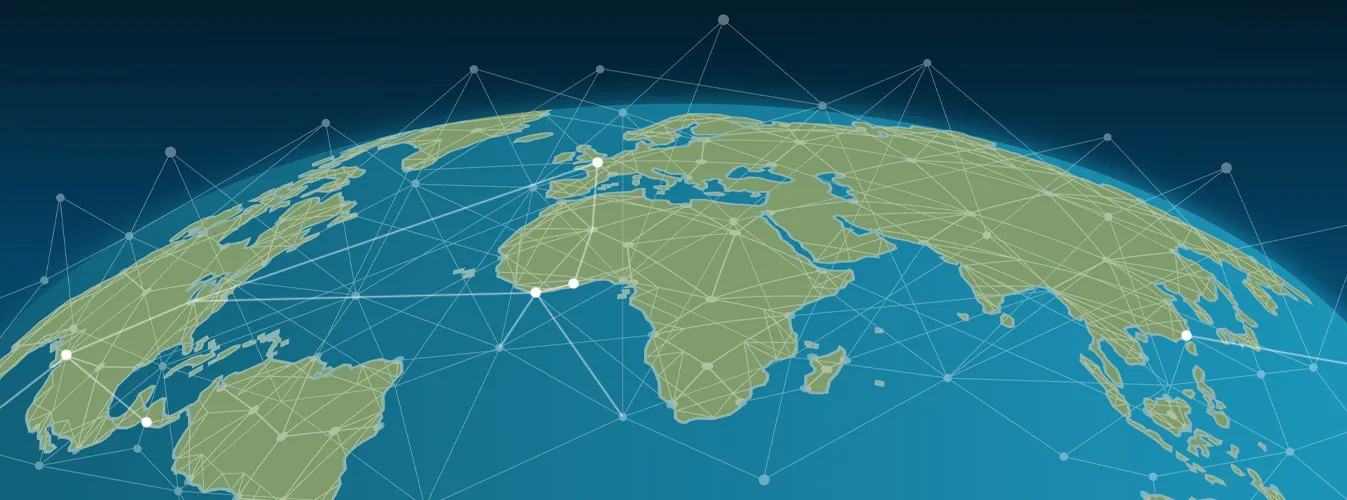
Section titled “Bridging Science and Policy”The Modelling Group is an interdisciplinary pillar of Solving-FCB, dedicated to exploring how diverse modelling methodologies can inform local decision-making and sustainable policy. By integrating biophysical, socio-ecological, and qualitative approaches, the group seeks to map the "architecture" of the nexus: the complex interactions between food security, climate resilience, and biodiversity conservation.
Core methodologies and frameworks
Section titled “Core methodologies and frameworks”The group employs a variety of tools to translate complex data into actionable insights:
- The "Value Lens" approach: Explores how trade-offs and synergies within the nexus change depending on a community's underlying values, such as relational versus economic priorities.
- Fuzzy Cognitive Mapping (FCM): Used primarily in the Netherlands and Brazil case studies, FCM is a semi-quantitative tool that maps system dynamics based on expert and community perceptions. It helps identify policy leverage points where process-based models may lack social data.
- Structured Decision Making (SDM): Used to elicit concrete community objectives, helping partners like the Tla'amin Nation and stakeholders in Costa Rica develop climate-resilient conservation and marine spatial plans.
- Nature Futures Framework (NFF): Applied to co-create future visions with local stakeholders, ensuring that scientific models align with community-identified seeds for solution-building.
Global applications and impact
Section titled “Global applications and impact”Our modelling efforts are grounded in real-world case studies across the partnership:
- Canada: Researchers are modelling kelp restoration sites along the British Columbia coast to identify areas that will remain climatically suitable in the future, supporting the Tla'amin Nation's food sovereignty goals.
- China: The team evaluates the global potential for seaweed aquaculture, specifically modelling its capacity for nutrient removal and carbon sequestration under different market demands.
- Netherlands: Modelling focuses on sectoral disconnects in Dutch policy, such as how terrestrial nutrient reduction targets can inadvertently affect low-trophic aquaculture.
- Costa Rica: Quantitative models are being developed to simulate nutrient input scenarios (nitrates and phosphates) in the Gulf of Nicoya to understand impacts on marine health and small-scale fisheries.
- West Africa: Teams in Nigeria and Ghana are streamlining fisheries, climate, and plastics datasets for integration with broader partnership modelling frameworks.
Future synthesis and capstone products
Section titled “Future synthesis and capstone products”As the partnership enters its final phase, the Modelling Group is focused on several capstone initiatives:
- Counterfactual analysis: A planned study exploring the consequences of not integrating all three nexus factors, showing how focusing solely on food security can inadvertently damage biodiversity or climate resilience.
- Cross-case comparison: A methodological review comparing strictly biophysical models with socioeconomic and cultural models to identify shared lessons across global contexts.
- Practitioner's toolkit: A lessons-learned resource for policymakers documenting challenges in replicating nexus research and providing practical tools to overcome them.
By facilitating bottom-up community engagement alongside top-down scientific analysis, the Modelling Group helps ensure that knowledge generated by the FCB partnership provides a robust foundation for a more sustainable future.






Outputs
- Climate change strengthens the case for a high seas fishing ban (2026-06-19)
- Shifting Trends in Aquaculture's Biological Potential to Address Food, Climate and Biodiversity Challenges (2026-03-25)
- The Gendered Impacts of Climate Change on Fisherfolk: Evidence from Nigeria and Cameroon (2026-01-26)
- Large Fisheries Declines Linked to Compound and Extreme Climate Events (2025-11-19)
- Marine heatwaves deeply alter marine food web structure and function (2025-11-07)
- Decent work in fishing in a changing climate (2025-11-01)
- Transforming towards what? A review of futures-thinking applied in the quest for navigating sustainability transformations (2025-04-29)
- Making the case for gender-inclusive fisheries governance, policies and climate adaptation (2024-12-05)
- The spatiotemporal changes in fish and invertebrate community structure and habitat viability in the Yangtze Estuary (2024-12-01)
- Climate change undermines seafood micronutrient supply from wild-capture fisheries in Southeast Asia and Pacific Island countries (2024-12-01)
- Climate change alters social‐ecological trade‐offs in achieving ocean futures' targets (2024-07-31)
- Large potential impacts of marine heatwaves on ecosystem functioning (2024-07-01)
- Utilizing basic income to create a sustainable, poverty-free tomorrow (2024-06-01)
- A traits-based approach to assess aquaculture’s contributions to food, climate change, and biodiversity goals (2024-05-31)
- Historical climate drivers and species’ ecological niche in the Beaufort Sea food web (2024-05-14)
- Good fisheries management is good carbon management (2024-03-21)
- Projecting contributions of marine protected areas to rebuild fish stocks under climate change (2024-03-02)
- WTO must complete an ambitious fisheries subsidies agreement (2024-02-02)
- Comparative analysis of climate-induced changes in distribution of representative fish species in the Yellow Sea (2024-02-01)
- The new UN high seas marine biodiversity Agreement may also facilitate climate action: a cautiously optimistic view (2024-01-25)
- Detecting, attributing, and projecting global marine ecosystem and fisheries change: FishMIP 2.0 (2024-01-22)
- Potential impacts of reduced seafood consumption on myocardial infarction among coastal First Nations in British Columbia, Canada (2024-01-01)
- Climate change exacerbates nutrient disparities from seafood (2023-10-30)
- Towards a better future for biodiversity and people: Modelling Nature Futures (2023-09-01)
- Drivers of conflict and resilience in shifting transboundary fisheries (2023-09-01)
- The living infinite: Envisioning futures for transformed human-nature relationships on the high seas (2023-07-01)
- Global estimates of suitable areas for marine algae farming (2023-06-01)