
West Africa Case Study
In West Africa, we examine whether and how resolving illegal, unregulated and unreported (IUU) fishing in the Gulf of Guinea would enhance the resilience of marine ecosystem services for sustainable livelihoods under climate change.
Overview
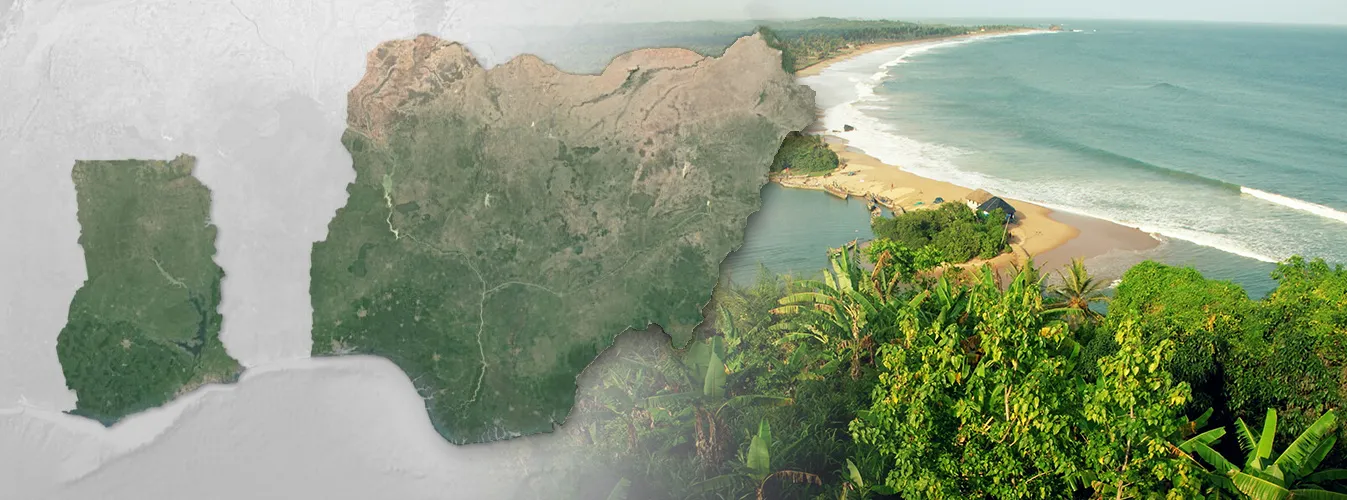
Section titled “Overview”The West Africa case study focuses on the Gulf of Guinea (Ghana and Nigeria). Fish consumption and production trends, and the pressures on coastal communities, are central to understanding the food–climate–biodiversity nexus in the region.
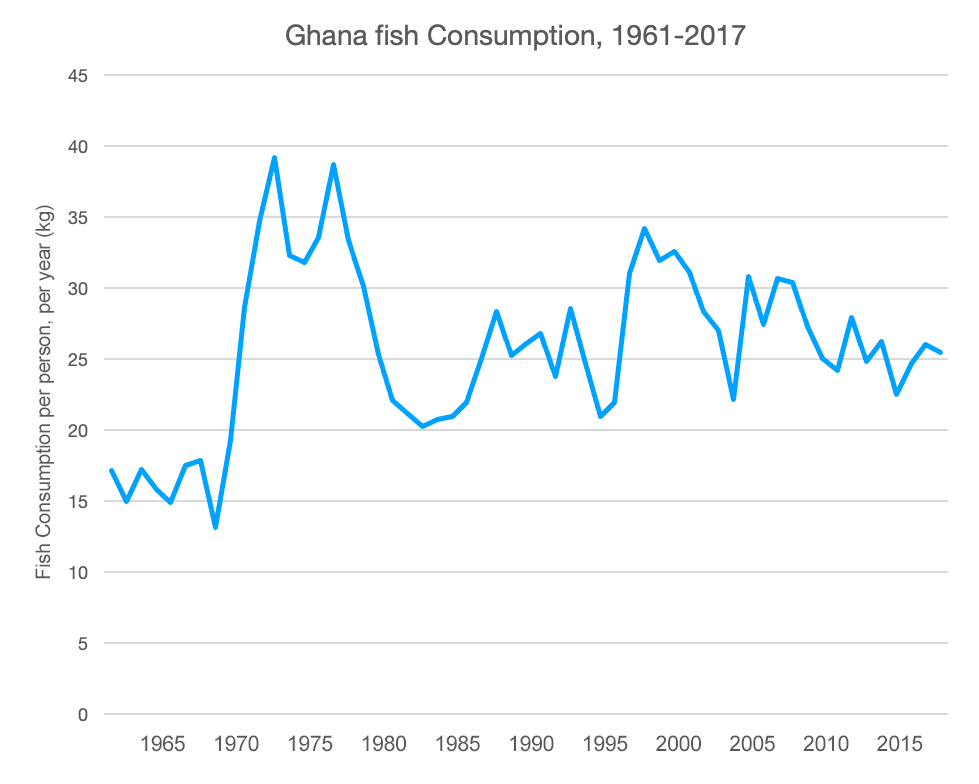
Figure 1: FAO data of fish consumption in Ghana from 1961–2017.
The factors leading to a decrease in overall fish production are complex. They include:
- IUU (illegal, unregulated and unreported) fishing
- Over-capitalization of small fishing vessels such as canoes
- Destructive methods such as dynamite, poisons and bottom trawling—in Ghana the practice of industrial vessels discarding bycatch to canoes at sea is known as Saiko
- Other pressures including tidal waves, trawlers, and fishing in mangroves
- Poor management of fisheries and inadequate governmental regulations
These factors make it harder for coastal communities to adapt. They cannot reconcile the loss of fish production with the impacts of climate change and biodiversity loss. Destructive practices (dynamite, poisons, bottom trawling) damage the sea floor and disrupt the marine ecosystem, leading to declining fish production and depleted stocks. Climate-related obstacles such as tidal waves further affect coastal communities. Depleting fish stocks also push fishers into mangrove areas, with further loss of biodiversity.
Solving-FCB is working with local researchers to better understand local ecosystems and to explore policies and human actions that can support food security, climate mitigation and biodiversity conservation goals.
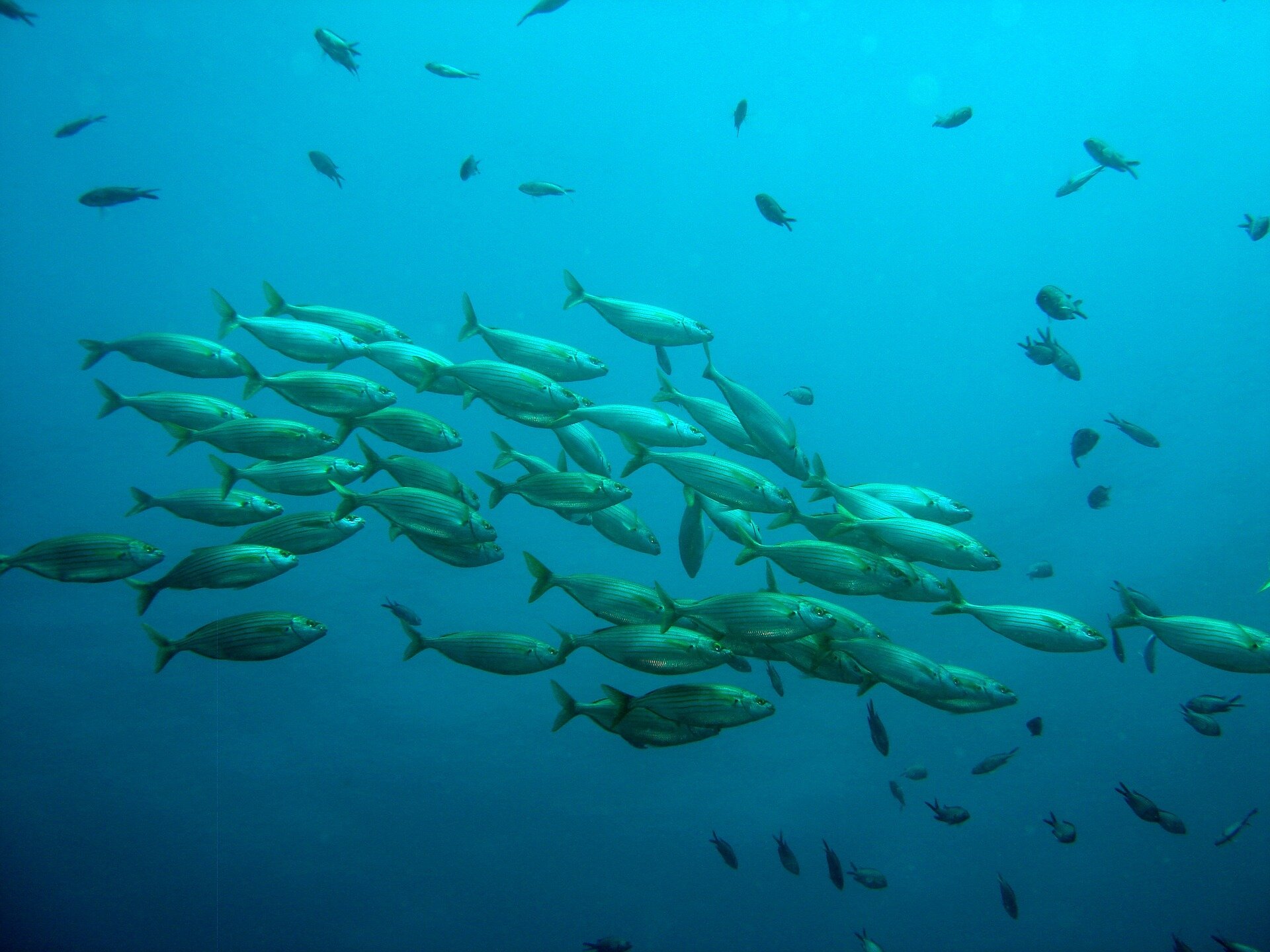
Credit: Pixabay/CC0 Public Domain












Updates
Section titled “Updates”Related links
Section titled “Related links”- Watch: West Africa case study
- Fisheries and Climate Change in Ghana: Impacts, Causes and Solutions - Muntaka.com
- Fisheries Under Pressure - from Ghana to the Caribbean - World Bank
- Ghana's fishing industry has a 'golden seaweed' problem - how citizen science can help - The Conversation
Outputs
- Climate change strengthens the case for a high seas fishing ban (2026-06-19)
- Shifting Trends in Aquaculture's Biological Potential to Address Food, Climate and Biodiversity Challenges (2026-03-25)
- The Gendered Impacts of Climate Change on Fisherfolk: Evidence from Nigeria and Cameroon (2026-01-26)
- Transforming towards what? A review of futures-thinking applied in the quest for navigating sustainability transformations (2025-04-29)
- A comparative assessment of economic, social, and environmental performance of tilapia aquaculture in Nigeria and Ghana (2025-01-28)
- Impact of the coronavirus pandemic on the aquaculture industry in Sunyani Municipality, Ghana (2024-12-31)
- Making the case for gender-inclusive fisheries governance, policies and climate adaptation (2024-12-05)
- Climate change alters social‐ecological trade‐offs in achieving ocean futures' targets (2024-07-31)
- Utilizing basic income to create a sustainable, poverty-free tomorrow (2024-06-01)
- A traits-based approach to assess aquaculture’s contributions to food, climate change, and biodiversity goals (2024-05-31)
- Historical climate drivers and species’ ecological niche in the Beaufort Sea food web (2024-05-14)
- Unraveling the drivers of the adoption of improved fish smoking technology among small-scale fisheries: A case study of the Ahotor oven in Ghana (2024-05-01)
- Effects of Anthropogenic Activities on Sardinella maderensis (Lowe, 1838) Fisheries in Coastal Communities of Ibeju-Lekki, Lagos, Nigeria (2024-03-29)
- Good fisheries management is good carbon management (2024-03-21)
- WTO must complete an ambitious fisheries subsidies agreement (2024-02-02)
- A Closer Look at Socio-Economic and management perspectives of shark fishery in Ghana (2023-11-26)
- Towards a better future for biodiversity and people: Modelling Nature Futures (2023-09-01)
- Drivers of conflict and resilience in shifting transboundary fisheries (2023-09-01)
- Indigenous youth must be at the forefront of climate diplomacy (2023-08-04)
- The living infinite: Envisioning futures for transformed human-nature relationships on the high seas (2023-07-01)
- Global estimates of suitable areas for marine algae farming (2023-06-01)